Most companies don't hire a web design firm very often. A website rebuild might happen once every five or seven years — sometimes longer.
So when the time comes, it's not always obvious what to look for in a web design company, what questions to ask, or how to tell a good fit from a bad one.
This guide is meant to make the process of how to choose a web design company easier.
1. Get clear on scope
Before you start evaluating companies, it helps to get clear on the scope of what you're looking for.
A few questions worth thinking through before your first conversation:
Are you doing a full rebrand, or just rebuilding the site?
If your logo, color palette, and brand identity are already solid, a web developer can work with what you have.
If you're starting from scratch on brand, make sure the firm you're considering handles that — or that you have someone else handling it.
Do you need copywriting?
Some companies come to a website project with copy ready to go.
Others need help writing it from scratch. Not every web design firm offers copywriting, and it's worth knowing upfront whether that's part of the engagement or something you'll need to source separately.
Do you need e-commerce?
A site that sells products online is a meaningfully different project than a standard business website. Make sure the web designers you're talking to have relevant experience if you need an e-commerce website.
How complex is your organization?
A single-location business and a multi-location organization with dozens of providers or service lines have different structural needs.
The more complex your organization, the more important it is that the firm you hire has experience thinking through information architecture — not just website design.
Getting clear on these things before you start talking to web designers will help you filter faster. It will also help any firm you speak with give you a more accurate picture of what the project actually involves.
2. Look at their portfolio — with the right lens
Reviewing their web design portfolio is the obvious first step when researching web designers. But how you review it matters.
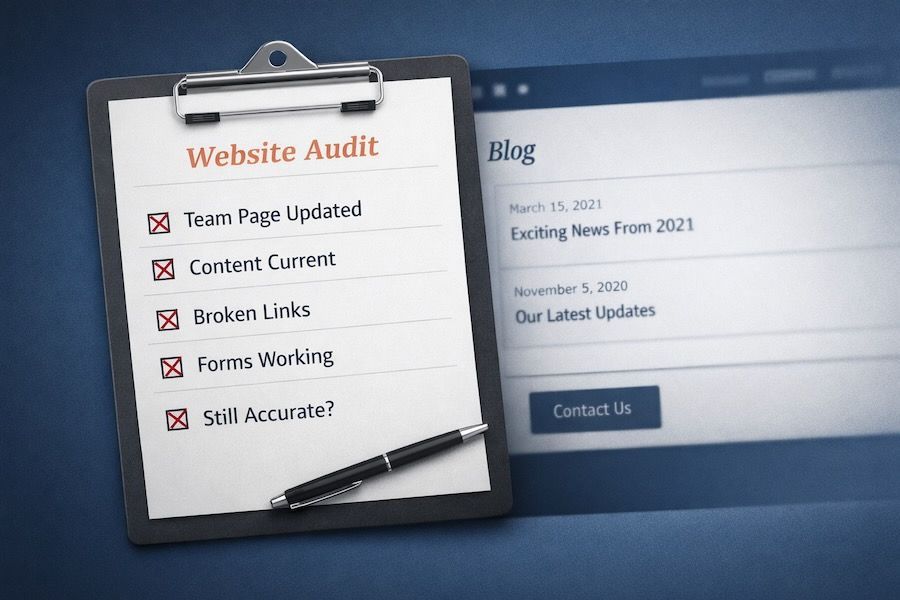
Keep in mind that a live website may look very different from what the designer originally built.
After a site is handed off, clients update pages, add content, and make changes over time — sometimes carefully, sometimes not.
A site that launched beautifully two years ago may not look the same today, and that's not necessarily a reflection of the designer's work.
So when you're reviewing a firm's portfolio, give more weight to the screenshots and case studies on their own site than to what the live version of those sites looks like today.
"Give more weight to the screenshots on the web designer's site than to what the live website looks like today."
Beyond aesthetics, look at whether they explain the thinking behind their work.
A portfolio that walks through the strategy — why certain decisions were made, what problems were being solved — tells you a lot more than one that just shows finished results.
It gives you a glimpse into how they think, which matters as much as how things look.
3. Look for signs they're staying current
Web design and SEO best practices change. A firm that was doing strong work five years ago may or may not still be current — and it's not always easy to tell from the outside.
One reasonable signal: do they publish thought leadership?
A web designer's blog, a YouTube channel, or active social media where they share what they know suggests a firm that's paying attention.
It also gives you a sense of how they think and communicate before you ever get on a call with them — which can be useful context early in the process.
4. Read their reviews
Look at what past clients say — not just about the finished website, but about the experience of working with the firm.
- Were they easy to communicate with?
- Did the project move at a reasonable pace?
- Were there surprises along the way, and how were they handled?
Reviews often reveal patterns that a portfolio won't. A website developer can produce beautiful work and still be difficult to work with.
Conversely, a firm with a more modest portfolio might have an exceptional track record for client experience. Both things are worth knowing.
5. Ask how they run a project
Once you're in conversation with a web design company, ask them to walk you through how a project actually works.
- How do they kick things off?
- How are decisions made, and who makes them?
- What does a typical timeline look like?
- What do they need from you, and when?
A firm that can answer these questions plainly — without a lot of jargon or a lengthy deck — usually has a clear, repeatable process.
That matters.
A well-run project moves forward steadily. A poorly run one stalls, drags, and tends to consume more of your time than you expected.
6. Ask what happens after launch
This is the question most buyers forget to ask until it's too late.
A website isn't finished when it launches. It needs to be updated, maintained, and kept in working order over time.
- Your company evolves
- Integrations break
- Plugins need updating
And without someone responsible for those things, websites tend to drift — slowly falling out of date in ways that aren't always obvious until the problems have been sitting there for a while.
Before you hire anyone, ask what their model looks like after launch.
- Do they offer ongoing maintenance?
- Is that included, optional, or not available at all?
If you'll be managing the site yourself after launch, make sure you understand what that actually involves.
Understanding what a website maintenance plan should include before you hire a firm is a reasonable step — it will help you ask better questions and know what you're signing up for.
7. Understand how pricing works
Web design pricing varies widely, and it's worth understanding what drives that variation before you start comparing quotes.
Factors that typically affect cost include:
- Size and complexity of the website
- Whether copywriting is included
- The level of custom design work involved
- The platform being built on
A firm's size and experience level will also affect their rates.
A newer or independent web designer may price differently than an established boutique firm or a larger agency — and there are legitimate reasons to consider options across that range depending on your needs and budget.
When comparing quotes, make sure you're comparing the same scope. A lower number on paper may reflect a narrower scope, not necessarily a lesser quality of work.
8. Pay attention to how they treat you before you hire them
The sales process is a preview.
- How quickly do they respond to your initial inquiry?
- Do they ask thoughtful questions, or do they move straight to pitching?
- When you ask something direct, do you get a straight answer?
A firm that's responsive, curious, and clear when they're trying to win your business is likely to behave the same way once they have it.
A firm that's slow, vague, or difficult to pin down at this stage rarely improves after the contract is signed.
You don't need a formal scorecard. Just pay attention.
Quick Summary: What to Look For Before Your Hire a Web Design Company
1. Get clear on your scope before you start talking to firms
2. Review portfolios for design sensibility and strategic thinking — not just how the live site looks today
3. Look for signs the firm is staying current in the industry
4. Read reviews with an eye toward the working experience, not just the output
5. Ask how they run a project and what the timeline looks like
6. Ask what happens after launch — and who's responsible for ongoing maintenance
7. Understand what's driving the pricing before you compare quotes
8. Pay attention to how they communicate during the sales process
Ready to Start the Conversation?
If you're evaluating web design companies and want a straightforward sense of what working with Bonfire Studio looks like, we're happy to talk.
No pressure. No pitch deck. Just an honest conversation about what you need and whether we're a good fit.

About the Author: Sara MacQueen
Sara MacQueen is the founder of Bonfire Studio , a boutique web design studio specializing in modern, custom websites for established organizations. She has been building professional websites for over 20 years and holds certifications in Duda and HubSpot SEO. Sara started Bonfire Studio to make the web design process straightforward for busy leadership teams who want the work done properly and off their plate.